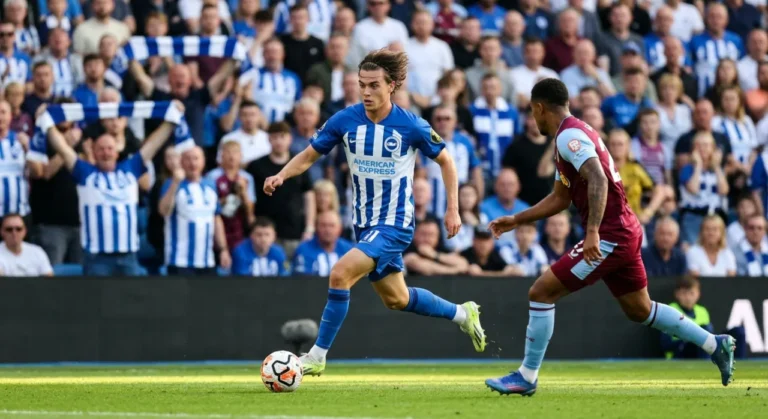

Norway is known as a winter sports country, but walk into almost any pub in Oslo, Bergen, or Trondheim on a Saturday afternoon and you will see rows of people wearing Liverpool, Manchester United, and Arsenal shirts, arguing loudly about English football as if the clubs were just down the road.
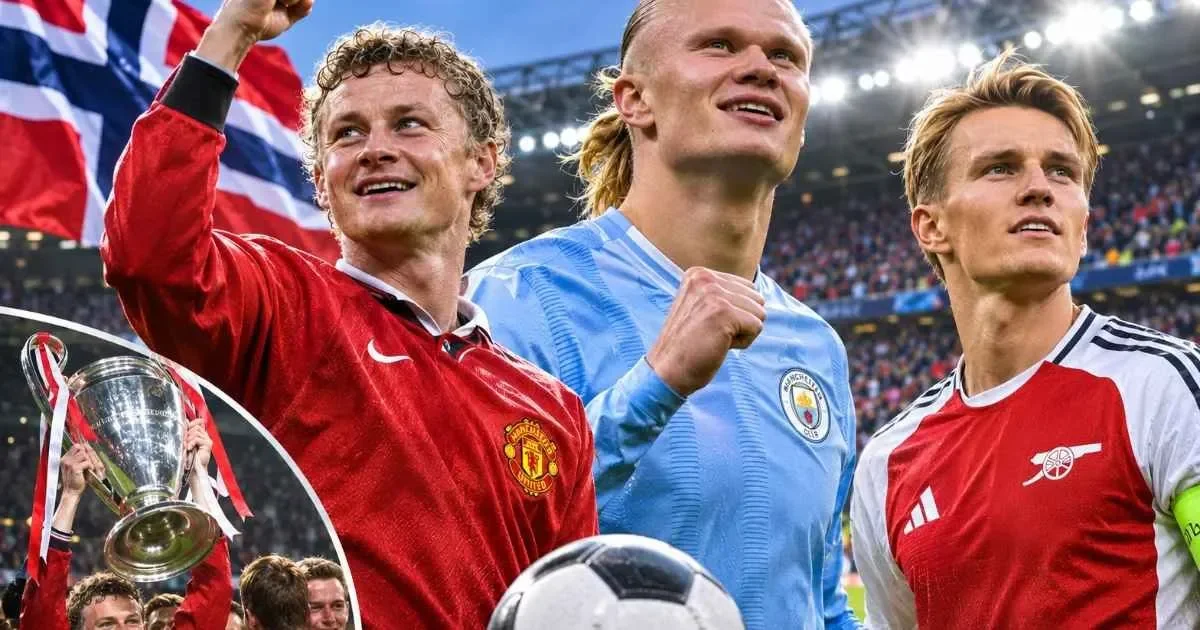
Norwegians have a long love affair with the Premier League, and over
Norwegians have a long love affair with the Premier League, and over the years that connection has gone both ways. A steady stream of Norwegian players has made it big in England and across Europe, with some becoming cult heroes and a few turning into genuine legends.
English football has been on Norwegian television since the late 1960s, when Saturday matches were broadcast live. Generations grew up watching tippekampen, the weekly English game linked to the football pools, and many families picked an English team long before they had any reason to.
When the Premier League launched in 1992, Norwegian players were ready. The national team was strong in the 1990s, reaching World Cups in 1994 and 1998 and even beating Brazil in France. English clubs liked what they saw in tall, fit, disciplined players who handled the physical game and rarely caused trouble.
Names like Tore André Flo at Chelsea, Henning Berg at Blackburn and
Names like Tore André Flo at Chelsea, Henning Berg at Blackburn and Manchester United, Ronny Johnsen at United, and Stig Inge Bjørnebye at Liverpool became familiar to English fans. Later, John Arne Riise played a big part in Liverpool’s famous 2005 Champions League win, and Brede Hangeland became a fan favourite at Fulham.
Of all the Norwegians who played in England, one name stands above the rest. Ole Gunnar Solskjær arrived at Manchester United from Molde in 1996 as a quiet, baby-faced striker that few people outside Norway had heard of. He scored on his debut and simply kept going.
Solskjær became known as the super sub because he often started on the bench, studied the game carefully, and came on to score at exactly the right time. The most famous example came in the 1999 Champions League final in Barcelona. With United losing to Bayern Munich deep into stoppage time, Teddy Sheringham equalised and then Solskjær poked in the winner. United won the treble that season, and the Norwegian became part of club history.
After injuries ended his playing career, Solskjær moved into coaching
After injuries ended his playing career, Solskjær moved into coaching. He won league titles with Molde and later returned to Old Trafford as manager. His time in charge had real highs and some painful lows, but his bond with United fans never fully disappeared, and the 1999 final remains the first thing many football fans think of when they hear his name.
For a while after the golden 1990s, Norwegian football went quiet internationally as the national team struggled to qualify for tournaments and fewer players reached the top clubs. Then a new generation arrived loudly.
Erling Haaland grew up in Bryne as the son of former Leeds and Manchester City player Alf-Inge Haaland. He went from Molde to Red Bull Salzburg and Borussia Dortmund, scoring at an incredible rate everywhere. When he joined Manchester City in 2022, he broke the Premier League record for goals in a single season in his first year, turning into one of the most famous athletes on the planet.
Martin Ødegaard took a different route as a teenage sensation who
Martin Ødegaard took a different route as a teenage sensation who joined Real Madrid at just 16. For a few years his career was a slow and sometimes frustrating search for the right fit, which he finally found at Arsenal by becoming the club’s captain and creative leader, proving that patience pays off.
Behind these two, more Norwegians are playing in Europe’s top leagues than at any time in decades. Clubs in Germany, Italy, the Netherlands, and Scandinavia regularly sign young players from Norwegian academies who go on to compete in UEFA tournaments like the Champions League, Europa League, and Conference League.
The women’s game has an equally stellar pedigree, as Norway won the Women’s World Cup in 1995 and Olympic gold in 2000, while Ada Hegerberg became the first winner of the women’s Ballon d’Or in 2018, proving that Norwegian women have been world class for a long time.
When boots go into the cupboard, former Norwegian football icons often
When boots go into the cupboard, former Norwegian football icons often move into coaching, managing clubs at home and abroad. Others become television pundits filling studio seats every weekend to explain Premier League tactics, take on sporting director or academy roles to help the next generation, or step away from football entirely for business and family life.
There is real optimism in Norway right now. With Haaland and Ødegaard leading the way, the men’s national team finally has stars that can compete with any opponent, inspiring young players who see them on television every week.
The Football Association of Norway has also invested heavily in youth development, coaching education, and facilities. Artificial pitches and indoor halls mean kids can play all year round, slowly erasing the historical disadvantage of dark and snowy winter months.
Challenges remain because a small population means the talent pool will
Challenges remain because a small population means the talent pool will never be huge, and top players leave Norway young, causing the domestic league to lose its best talents early. Yet that pattern has also become a strength, as Norwegian clubs have learned to develop and sell players to bigger leagues.
From Solskjær’s famous goal in Barcelona to Haaland’s record-breaking seasons in Manchester, Norwegian footballers have written memorable chapters in European football with a mix of hard work, humility, and occasional moments of pure magic.
For fans back home, these players are more than athletes. They are a link between a small Nordic country and the biggest stage in world football, and with a new generation rising, the best stories are still to come.